
Shipping Tags and Fasteners Guide: Complete Solutions for Singapore Businesses
Singapore’s position as one of Asia’s busiest logistics hubs means that thousands of businesses depend on efficient, reliable identification systems to keep goods moving smoothly from warehouse to customer. At the centre of this system sits a deceptively simple tool, i.e., the shipping tag.
Paired with the right fastener, a shipping tag does far more than display an address. It serves as the physical identity of a parcel, a pallet, a piece of equipment, or a retail product. It communicates handling instructions, tracks inventory, supports compliance documentation, and reinforces professional branding at every touchpoint in the supply chain.
Yet despite their importance, shipping tags and fasteners are frequently treated as an afterthought. Businesses grab whatever is cheapest or most convenient without considering whether the tag material, size, or attachment method actually suits their operational environment. The result is tags that tear during transit, fasteners that snap under load, and critical information that becomes illegible before a shipment reaches its destination.
This comprehensive guide covers everything Singapore businesses need to know about selecting, using, and sourcing the right shipping tags and fasteners for their specific needs.
What Are Shipping Tags and Why Do They Matter?
Shipping tags are durable, typically reinforced cards or labels designed to be physically attached to packages, pallets, equipment, or products using a fastener such as wire, string, or a plastic loop. Unlike adhesive labels that stick directly to a surface, shipping tags hang from or are tied to the item they identify, making them ideal for irregularly shaped objects, reusable containers, and items where adhesive labels would not stick reliably.
A standard shipping tag includes fields for essential information such as the sender’s address, the recipient’s address, a tracking or reference number, handling instructions, and sometimes a barcode. In Singapore’s trade environment, where goods frequently move through multiple handling points including warehouses, freight forwarders, customs checkpoints, and last-mile delivery services, the durability and legibility of a shipping tag directly affects whether a shipment arrives at the correct destination on time and intact.
Beyond logistics, shipping tags are widely used across industries for inventory management, asset tracking, retail pricing, quality control labelling, and event identification. Their versatility makes them an indispensable supply for businesses of virtually every size and sector.
Types of Shipping Tags Used by Singapore Businesses
Shipping tags come in a range of materials, sizes, and configurations, each suited to different operational demands. Understanding the options available helps you choose the tag that will perform best in your specific environment.
Manila Shipping Tags
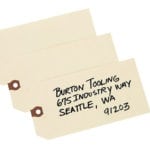
Manila tags are the most common and widely recognised type of shipping tag. Made from heavyweight manila cardstock, they offer a sturdy writing surface that accepts both handwritten and printed text clearly. Most manila tags feature a metal-reinforced eyelet at one end to prevent the fastener hole from tearing under stress. These tags are cost-effective, widely available, and suitable for general-purpose shipping, warehousing, and internal inventory identification. For Singapore businesses handling standard domestic freight, manila tags provide reliable performance at an accessible price point.
Coloured and Fluorescent Tags
Coloured tags serve a dual purpose. They provide the same functional labelling space as standard manila tags while adding a highly visible colour coding system that allows warehouse staff and logistics teams to categorise shipments at a glance. For example, a distribution centre might use red tags for urgent or priority shipments, green for standard delivery, yellow for items requiring special handling, and blue for returns. Fluorescent tags take visibility a step further, offering eye-catching neon colours that stand out in dimly lit warehouses, busy loading docks, and crowded container yards. In Singapore’s high-volume port and warehousing environment, colour-coded tags can significantly reduce sorting errors and speed up dispatch operations.
Waterproof and Weather-Resistant Tags
Singapore’s tropical climate brings year-round humidity, frequent rain showers, and high temperatures that can quickly degrade standard paper tags. For shipments that will be exposed to outdoor conditions, stored in non-climate-controlled warehouses, or transported in open vehicles, waterproof tags made from synthetic materials such as Tyvek, polyethylene, or laminated card are essential. These tags resist moisture, tearing, and UV fading, ensuring that critical shipping information remains legible throughout the entire journey, regardless of weather exposure.
Metal-Rimmed and Reinforced Tags
For heavy-duty applications where tags are subject to significant physical stress, metal-rimmed tags provide enhanced durability at the fastener point. The metal eyelet distributes the pulling force across a wider area, preventing the hole from tearing out even when the tag is attached to heavy pallets, industrial equipment, or machinery. These reinforced tags are commonly used in Singapore’s manufacturing, construction, and marine industries where items may be hoisted, dragged, or stacked during handling.
Understanding Tag Fasteners: Choosing the Right Attachment Method
A shipping tag is only as reliable as the fastener holding it in place. If the fastener breaks, falls off, or loosens during transit, the tag is lost and the item becomes unidentifiable. Choosing the right fastener for your application is just as important as selecting the right tag. Here are the main fastener types and their ideal uses.
Wire Fasteners
Wire fasteners are thin, flexible metal wires, typically galvanised steel, that thread through the tag’s eyelet and twist securely around the item. They offer strong, tamper-resistant attachment that holds up well under physical stress and outdoor conditions. Wire fasteners are the preferred choice for heavy industrial applications, outdoor storage, construction sites, and marine or port operations. In Singapore’s busy PSA terminals and Jurong industrial zone, wire-fastened tags are a common sight on palletised cargo and heavy equipment.
String Fasteners
String fasteners, usually made from cotton or synthetic twine, provide a softer, more flexible attachment method. They are easy to tie and untie, making them ideal for applications where tags need to be frequently replaced or updated, such as retail pricing, inventory rotation, and internal warehouse labelling. Cotton string is biodegradable and environmentally friendly, while synthetic string offers greater moisture and abrasion resistance. String-fastened tags are popular among Singapore’s retail businesses, food and beverage outlets, and boutique e-commerce sellers who want a clean, artisanal presentation on their products.
Plastic Fasteners
Plastic fasteners, also known as plastic loops or snap-lock fasteners, offer a quick and tool-free attachment method. They come in various lengths, typically one to three inches, and feature a locking mechanism that clicks securely into place once threaded through the tag eyelet. Plastic fasteners are lightweight, weather-resistant, and ideal for high-volume tagging operations where speed is a priority. They are widely used in retail garment tagging, exhibition labelling, luggage identification, and light-duty shipping applications. For Singapore businesses processing hundreds or thousands of tagged items daily, plastic fasteners offer the fastest attachment workflow.
Self-Locking Loop Fasteners
Self-locking loops are pre-formed plastic or nylon loops that cinch tightly around an item and lock in place without needing to be threaded through an eyelet. They are exceptionally convenient for tagging items that lack obvious attachment points, such as cables, pipes, bundles of materials, or oddly shaped equipment. In Singapore’s engineering and facilities management sectors, self-locking loop fasteners are commonly used for asset tagging and maintenance labelling.
How Singapore Businesses Use Shipping Tags and Fasteners
The versatility of shipping tags makes them useful across a remarkably wide range of industries and applications. Here is how different Singapore businesses put them to work.
Logistics and Freight Forwarding
Singapore handles millions of container shipments annually through its world-class port facilities. Freight forwarders, third-party logistics providers, and customs brokers use shipping tags to identify pallets, crates, and individual packages throughout the supply chain. Tags carry destination addresses, customs reference numbers, handling codes, and hazard warnings. Wire and reinforced fasteners ensure tags survive the physical demands of container loading, crane operations, and multi-modal transit.
Warehousing and Inventory Management
In warehouse operations, shipping tags serve as physical identifiers for bins, racks, pallets, and individual stock-keeping units. Colour-coded tags enable visual sorting systems that help pickers locate items quickly, while serialised tags support inventory counting and stocktake audits. Singapore’s Workplace Safety and Health Act also encourages proper labelling of storage areas, and clearly tagged inventory supports compliance with these guidelines.
Retail and E-Commerce
Retailers use hang tags for product pricing, brand storytelling, and care instructions. E-commerce sellers attach shipping tags to parcels that need visible handling instructions or return-address information. With Singapore’s e-commerce market growing rapidly, driven by platforms like Shopee, Lazada, and Qoo10, small and medium online sellers are increasingly using professional shipping tags to elevate their unboxing experience and reduce delivery errors.
Manufacturing and Quality Control
In manufacturing environments, tags track individual components or assemblies through production stages. Quality control teams attach inspection tags indicating whether items have passed, failed, or require rework. Wire-fastened tags withstand the oil, heat, and vibration common in factory settings. Singapore’s precision engineering, electronics, and pharmaceutical manufacturing sectors all rely on robust tagging systems to maintain traceability and regulatory compliance.
Events, Exhibitions, and Conferences
Singapore’s thriving MICE industry, encompassing meetings, incentives, conferences, and exhibitions, generates significant demand for identification tags. Luggage tags for delegate welcome packs, equipment tags for AV and staging gear, and branded hang tags for event merchandise all require reliable fasteners to remain attached throughout multi-day events at venues like Marina Bay Sands, Suntec Convention Centre, and Singapore Expo.
How to Select the Right Shipping Tags and Fasteners for Your Needs
With so many options available, selecting the right combination of tag and fastener requires a structured approach. Consider the following factors to make an informed decision.
Start with the environment. Ask yourself where your tagged items will be stored, handled, and transported. Indoor, climate-controlled environments allow standard manila tags to perform well. Outdoor, humid, or wet conditions demand waterproof or synthetic tags. Singapore’s tropical weather should be a primary consideration for any business whose goods spend time outside or in non-air-conditioned facilities.
Next, assess the physical demands. Heavy pallets and industrial equipment need metal-rimmed tags with wire fasteners. Lightweight retail products and garments pair well with standard tags and plastic or string fasteners. Matching the tag’s and fastener’s strength to the weight and handling stress of the item prevents tag loss during transit.
Then consider the information requirements. If your tags need to carry barcodes, QR codes, or detailed text, choose larger tags with smooth, printable surfaces. If a simple handwritten reference number suffices, smaller tags save material cost. Ensure the tag surface is compatible with your writing instrument, whether that is a pen, marker, thermal printer, or laser printer.
Finally, think about volume and workflow speed. High-volume operations benefit from plastic snap-lock fasteners that attach in seconds without tools. Lower-volume applications where security matters more than speed are better served by wire fasteners that require deliberate attachment and are difficult to remove accidentally.
Best Practices for Using Shipping Tags in Singapore’s Climate
Singapore’s equatorial climate presents specific challenges for shipping tags that businesses should proactively address.
Always use waterproof or water-resistant ink when handwriting tags that will be exposed to rain or humidity. Standard ballpoint ink can smear and fade when wet, rendering the tag illegible. Permanent markers or weather-resistant pens provide far better longevity.
For printed tags, use laser-printed text wherever possible. Laser toner is fused to the surface and does not run when exposed to moisture, unlike standard inkjet ink which can bleed and dissolve in wet conditions.
Store unused tag stock in its original packaging in a cool, dry location. Humidity can cause cardstock tags to absorb moisture, curl, and become difficult to write on or feed through a printer. An air-conditioned storeroom or sealed plastic container protects your tag inventory from degradation.
Inspect fasteners before attaching them. Wire fasteners should be free of rust or corrosion, and plastic fasteners should snap firmly into their locking position. A fastener that fails during transit means a lost tag, and potentially a lost or misrouted shipment.
Where to Buy Quality Shipping Tags and Fasteners in Singapore
For Singapore businesses seeking a dependable, one-stop source for shipping tags and fasteners, Label Shop Online (labelshoponline.com.sg) offers a dedicated range of shipping tags and fasteners alongside their comprehensive catalogue of labels, name badges, and office supplies. Their product selection covers the full spectrum of tagging needs, from standard manila tags to heavy-duty reinforced options, paired with compatible wire, string, and plastic fasteners.
With convenient online ordering, a Singapore-based operation that understands local business requirements, and free shipping on orders over $100, Label Shop Online makes procurement simple and cost-effective. Whether you need a small quantity for a one-off project or bulk stock to support ongoing warehouse and logistics operations, their range is designed to serve businesses of every scale across the island.
Conclusion: The Right Tag and Fastener Combination Protects Your Business
Shipping tags and fasteners may be among the most affordable supplies a business purchases, but their impact on operational efficiency, delivery accuracy, and professional presentation is disproportionately large. A tag that tears, a fastener that snaps, or information that becomes illegible can lead to misrouted shipments, lost inventory, compliance failures, and damaged customer relationships.
By understanding the different tag materials, fastener types, and environmental considerations outlined in this guide, Singapore businesses can make informed purchasing decisions that protect their goods, streamline their workflows, and project professionalism at every stage of the supply chain.
Browse the complete range of shipping tags and fasteners at Label Shop Online and equip your business with the reliable identification solutions it deserves.