How to Choose Between Laser and Inkjet Labels for Your Singapore Office
Every Singapore office has a printer, and almost every office needs labels. Whether you are printing address labels for outgoing invoices, shipping labels for e-commerce parcels, filing labels for document organisation, or name badges for a company event, one critical decision determines whether your labels come out crisp and professional or smudged and wasted: choosing the right label type for your printer.
The distinction between laser labels and inkjet labels is not merely a marketing gimmick. These two label categories are engineered with fundamentally different materials and coatings because laser printers and inkjet printers apply ink in completely different ways. Using the wrong label in the wrong printer does not just produce poor results. It can damage your printer, waste your supplies, and cost your business money you did not need to spend.
This guide walks you through everything a Singapore office manager, procurement officer, or business owner needs to know to make the right choice.
How Laser and Inkjet Printers Work Differently
Before you can understand why label types matter, it helps to know how these two printer technologies actually function, because the differences are significant.
Laser printers use a dry powder called toner. A laser beam draws your design onto an electrically charged drum, toner particles cling to the charged areas, and the paper or label sheet passes through a fuser unit that applies intense heat and pressure to bond the toner permanently to the surface. This process happens at temperatures that can exceed 200 degrees Celsius.
Inkjet printers take the opposite approach. They spray microscopic droplets of liquid ink through tiny nozzles directly onto the label surface. The ink needs to be absorbed into the material and given a moment to dry. There is no extreme heat involved, which is why inkjet printers are gentler on the media they print on.
These two fundamentally different processes are precisely why laser labels and inkjet labels are manufactured with different materials, adhesives, and surface coatings. Each label type is optimised to work with one printing method and will perform poorly, or even cause damage, if used with the other.
What Makes Laser Labels Different from Inkjet Labels?
Laser Labels: Built for Heat
Laser labels are manufactured with heat-resistant adhesives and facestock materials that can withstand the high temperatures inside a laser printer’s fuser unit without curling, bubbling, peeling, or jamming. The surface is treated to accept dry toner particles and hold them firmly once fused.
If you put inkjet labels through a laser printer, the heat can melt the adhesive, cause the labels to peel off inside the machine, and leave a sticky residue on the fuser rollers. This kind of damage can be expensive to repair and may void your printer warranty.
Inkjet Labels: Built for Absorption
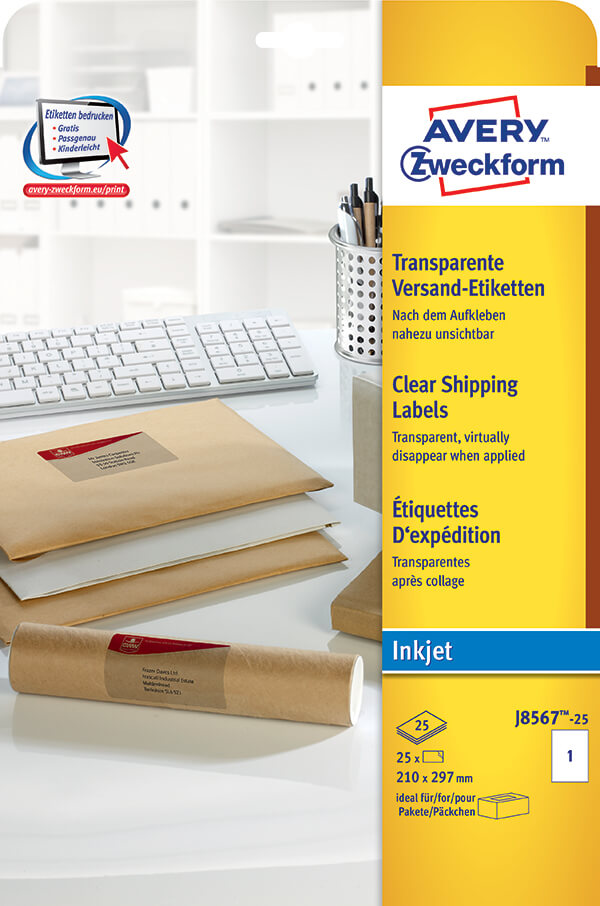
Inkjet labels feature a porous surface coating designed to absorb liquid ink quickly and evenly. This allows the ink to sink in, dry cleanly, and produce sharp text and vivid colours without bleeding or feathering.
If you run laser labels through an inkjet printer, the ink sits on the non-porous surface without being absorbed. The result is smeared, smudged text that never fully dries and rubs off at the slightest touch. You end up wasting both the labels and the ink.
Comparing Laser and Inkjet Labels: What Matters for Your Office
Choosing between laser and inkjet labels involves evaluating several practical factors that directly affect your office’s productivity and budget. Here is how the two options stack up across the criteria that matter most.
Print Speed and Volume
Laser printers are built for speed. A typical office laser printer can output 20 to 40 pages per minute, making laser labels the clear winner for high-volume label printing. If your Singapore office regularly prints batches of 50 or more label sheets at a time, whether for mass mailings, inventory management, or shipping operations, laser labels paired with a laser printer will get the job done significantly faster.
Inkjet printers are slower, typically averaging 8 to 15 pages per minute. For smaller offices that print labels occasionally or in small batches, this speed difference is negligible. But for businesses with heavy labelling demands, the time savings from laser printing add up quickly over a week or a month.
Print Quality and Colour
For text-based labels such as address labels, filing labels, and barcode labels, laser printers produce exceptionally sharp, clean results. The toner fuses to the surface permanently, so the text does not smudge, bleed, or fade easily. This makes laser labels ideal for the majority of standard office labelling tasks.
Where inkjet labels pull ahead is colour reproduction. Inkjet printers can produce rich, vibrant, photo-quality colour that is difficult for most office-grade laser printers to match. If your labels need detailed graphics, full-colour logos, or photographic images, such as product labels or branded marketing stickers, inkjet labels on a quality inkjet printer will typically deliver a more visually striking result.
Durability and Smudge Resistance
Once laser toner is fused to a label surface, it is remarkably durable. Laser-printed labels resist smudging, water spotting, and handling wear far better than standard inkjet labels. This is a particularly important consideration in Singapore’s humid tropical climate, where moisture exposure during storage or postal transit is a genuine concern.
Inkjet labels printed with standard dye-based inks are more susceptible to smudging if handled before fully dry and can bleed if exposed to moisture. However, pigment-based inkjet inks and specially coated waterproof inkjet labels offer significantly improved durability for applications where moisture resistance is essential.
Cost Per Label
The cost equation has two components: the label sheets themselves and the printing consumables.
Label sheet prices are broadly comparable between laser and inkjet varieties, though dual-compatible labels that work with both printer types may carry a slight premium. The real cost difference lies in the consumables. Laser toner cartridges have a higher upfront price but yield significantly more pages than inkjet cartridges, resulting in a lower cost per printed page. For offices printing labels frequently and in volume, laser printing is typically more economical in the long run.
Inkjet cartridges are cheaper to purchase initially but run out faster, particularly colour cartridges. For light or occasional label printing, the difference may be insignificant. But for consistent, daily label usage, the per-label printing cost with an inkjet can be noticeably higher over time.
Which Label Type Is Right for Your Singapore Office?
The best choice depends on your specific office environment, printing habits, and what you use labels for most. Here are some common scenarios to help you decide.
Choose Laser Labels If Your Office Handles High-Volume Mailing and Filing
If your primary labelling needs involve address labels, shipping labels, file folder labels, and barcode or inventory labels, laser labels are almost certainly the better fit. They print faster, produce crisp text, resist humidity-related smudging, and cost less per page at scale. Most Singapore corporate offices, legal firms, logistics companies, and government departments already use laser printers as their primary office machines, making laser labels the natural and compatible choice.
Choose Inkjet Labels If Your Office Needs Colour-Rich Branding
If your labels serve a branding or marketing purpose, such as product stickers with full-colour logos, promotional labels for event giveaways, or custom packaging labels with photographic elements, inkjet labels give you superior colour depth and creative flexibility. Small businesses, creative agencies, food and beverage startups, and home-based e-commerce sellers in Singapore often prefer inkjet labels for their visual impact.
Consider Dual-Compatible Labels If You Use Both Printer Types
Some offices in Singapore operate both a laser printer for everyday document printing and an inkjet printer for colour work. In this case, dual-compatible label sheets that are designed to work safely with either printer type offer the most flexibility. These labels use materials and adhesives that tolerate both heat-fused toner and liquid ink absorption, so you can print on whichever machine is available without worrying about compatibility issues.
Common Mistakes to Avoid When Buying Labels in Singapore
Even experienced office managers make labelling mistakes that waste money and time. Here are the most common pitfalls and how to sidestep them.
The first mistake is ignoring printer compatibility altogether. Grabbing any label sheet off the shelf without checking whether it is designed for your printer type leads to jammed printers, wasted label sheets, and potentially costly repairs. Always verify the label packaging specifies compatibility with your printer technology before purchasing.
The second mistake is using the wrong label size template. Even if you have the correct label type, printing with a misaligned template causes text to print off-centre or across label borders. Most reputable label suppliers provide free downloadable templates for popular software like Microsoft Word and Excel. Using these templates ensures perfect alignment every time.
The third mistake is storing labels improperly. Singapore’s year-round humidity can degrade label adhesive and cause sheets to curl if stored in unsealed packaging or near windows. Keep your label stock in its original sealed packaging until needed, and store it in a cool, dry environment away from direct sunlight.
The fourth mistake is buying on price alone without considering quality. Cheap, unbranded label sheets may seem like a bargain, but poor die-cutting, weak adhesive, and inconsistent sizing lead to jams, reprints, and wasted time that far exceed any upfront savings.
Where to Buy Quality Laser and Inkjet Labels in Singapore
For Singapore businesses looking for a reliable source of both laser and inkjet labels, Label Shop Online (labelshoponline.com.sg) offers an extensive catalogue covering every major label category. Their addressing labels, shipping labels, filing labels, and industrial labels are available in both laser and inkjet-compatible formats, making it easy to find the exact match for your office printer.
With convenient online ordering, a comprehensive product range from trusted brands, and free delivery on orders above $100, Label Shop Online takes the guesswork out of office label procurement. Whether you need a single pack of address labels or bulk quantities for a large-scale mailing project, their Singapore-based operation ensures fast, hassle-free fulfilment.
Conclusion: Match Your Labels to Your Printer and Save
Choosing between laser and inkjet labels is not a matter of which is objectively better. It is a matter of which is right for your printer, your volume, and your specific use case. Laser labels deliver speed, durability, and cost efficiency for text-heavy, high-volume office printing. Inkjet labels offer superior colour quality and creative flexibility for branding and visual applications.
The most important rule is simple: always match your label type to your printer type. This single decision prevents wasted supplies, protects your printer from damage, and ensures every label you print comes out clean, professional, and ready to use.
Explore the full range of laser and inkjet labels at Label Shop Online and equip your Singapore office with the right labels for every task.